
Olive Branch City Directory Collections
No printed Olive Branch city-directory run is documented anywhere so far. The University of Southern Mississippi McCain Library guide names R.L. Polk as Mississippi's main directory publisher. Yet its city list leaves out Olive Branch, Hernando, Southaven, and all of DeSoto County. That gap is about collections. It is not proof that a household never existed. Treat a catalog search as your first record search. Then try the repositories that hold related material.
| Collection | Years | Where Held | Access |
|---|---|---|---|
| USM Mississippiana R.L. Polk directory guide | City-specific, no Olive Branch run verified | USM McCain Library catalog and collection | Guide online; volumes cataloged separately |
| First Regional local-history and genealogy holdings | Item-specific, no complete Olive Branch directory run verified | B.J. Chain Public Library | Ask a librarian; some databases are in-library |
| MDAH DeSoto County records, Series 0355 | Selected items from 1902-33 | MDAH Digital Archives and reading room | Online descriptions/images plus reading-room material |
| MDAH DeSoto tax and land, Series 1202 | 1837, 1839-46, later item-specific years | MDAH Digital Archives | Digital items; inspect each title and image |
| NARA federal census | 1950 | National Archives | Free federal household search |
Never guess at publishers, first years, or missing-year explanations. The reliable move is catalog work. Search USM, First Regional, MDAH, and Mississippi State University by Olive Branch, DeSoto County, old place names, and the surname.
Olive Branch City Directory Leads at B.J. Chain
First Regional Library research services tie together digitized local history, WorldCat, research databases, and in-library Ancestry access. B.J. Chain Public Library sits at 6619 Highway 305 North in Olive Branch. Ask for more than directories. Request city and telephone directories, reverse directories, obituary indexes, newspapers, yearbooks, cemetery books, church histories, and interlibrary loan. A directory-only question misses companion sources. Those sources can identify a household when no local volume is on the shelf.
The library's research page lists these local-history routes. It is not a full resident list.
First Regional Library's research page is the source for this local-history access route.
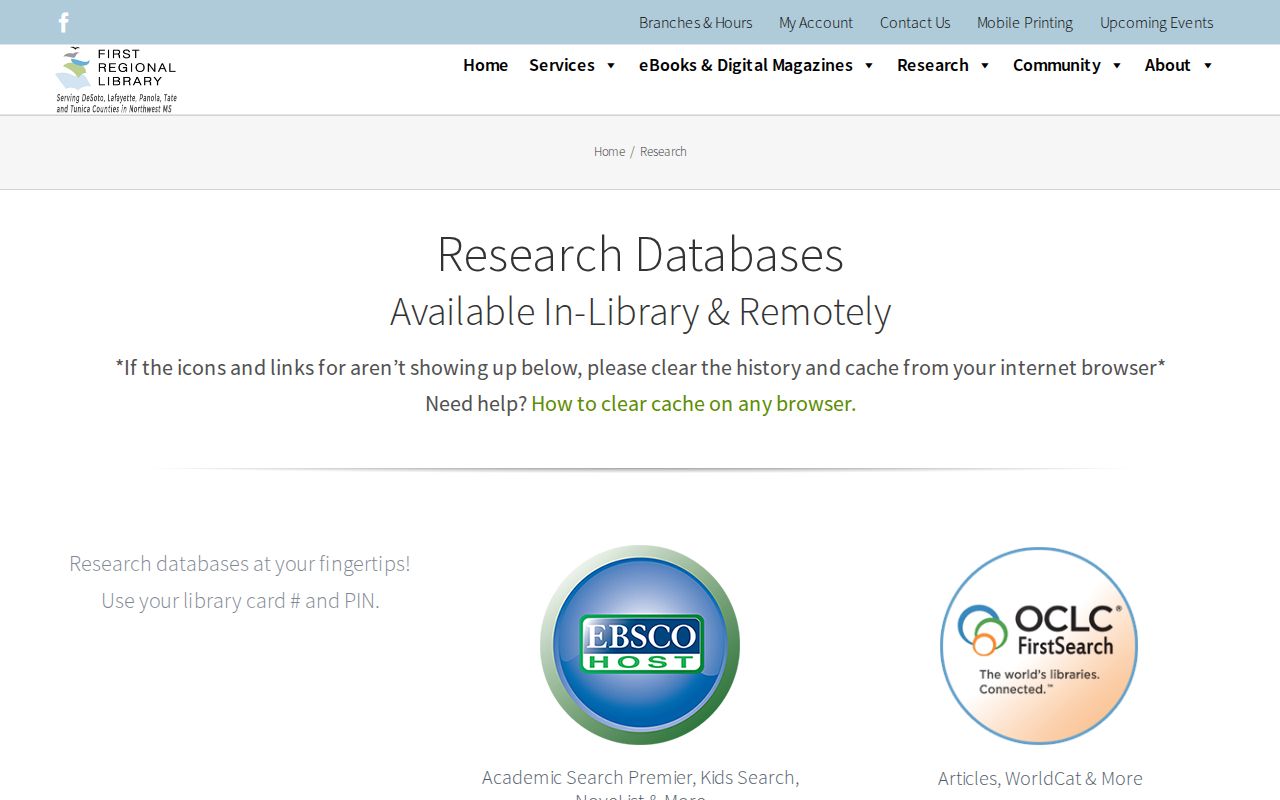
Note: Database availability, card rules, and PIN requirements at B.J. Chain can change, so confirm current access terms with the Olive Branch library before a visit.
Olive Branch Directory Alternatives Online
The First Regional collection in the Mississippi Digital Library holds selected genealogy books by Louise Cox Fox. It also carries a Genealogy and Local History Collection. Search by surname, cemetery, church, or place. A hit can mean an index or a scanned book. Check which one you have. A name in an index needs the underlying entry or image for real context.
The First Regional Digital Library collection supplies the digitized local-history context shown here.
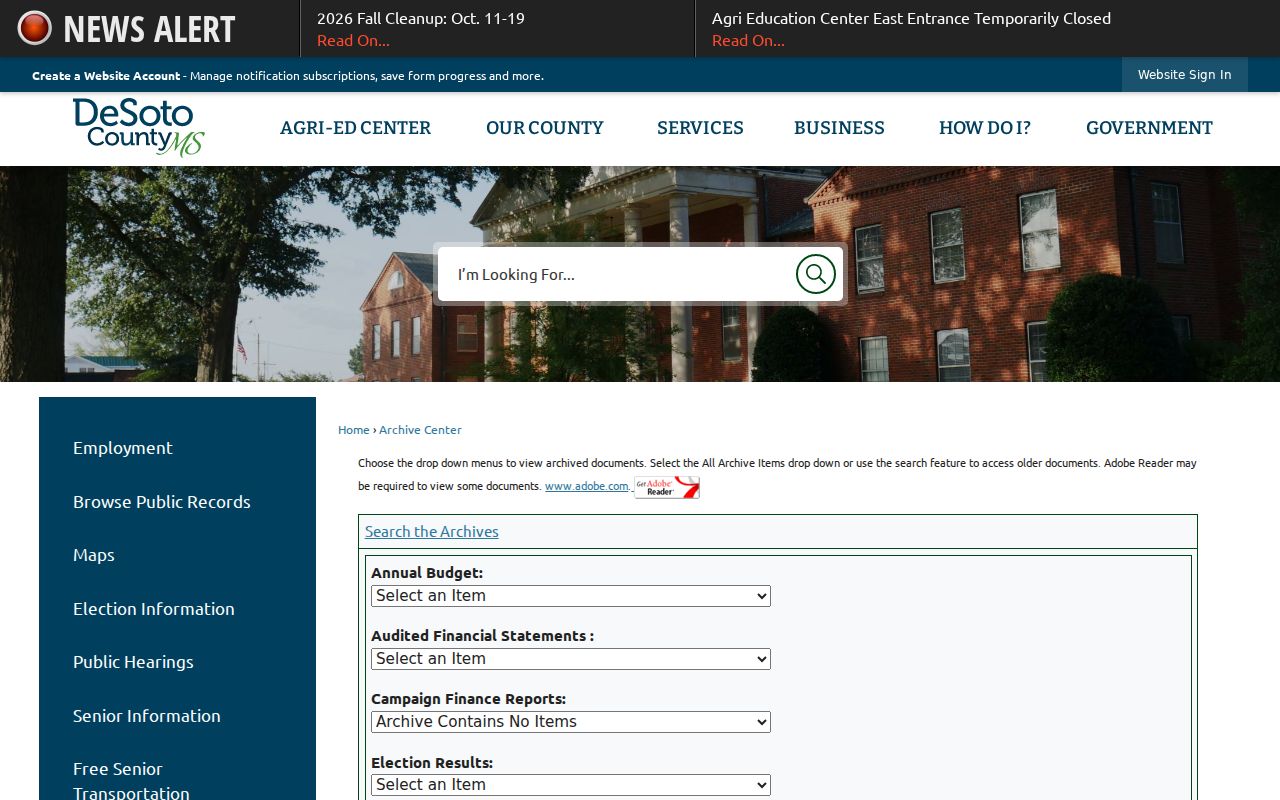
The City of Olive Branch Archive Center supports keyword, category, time-period, and date-range searches of older public documents. It can date a notice or a local change. It is not a household roster.
The Olive Branch archive search interface is the source for this public-document route.
Olive Branch Directory Clues in Hernando
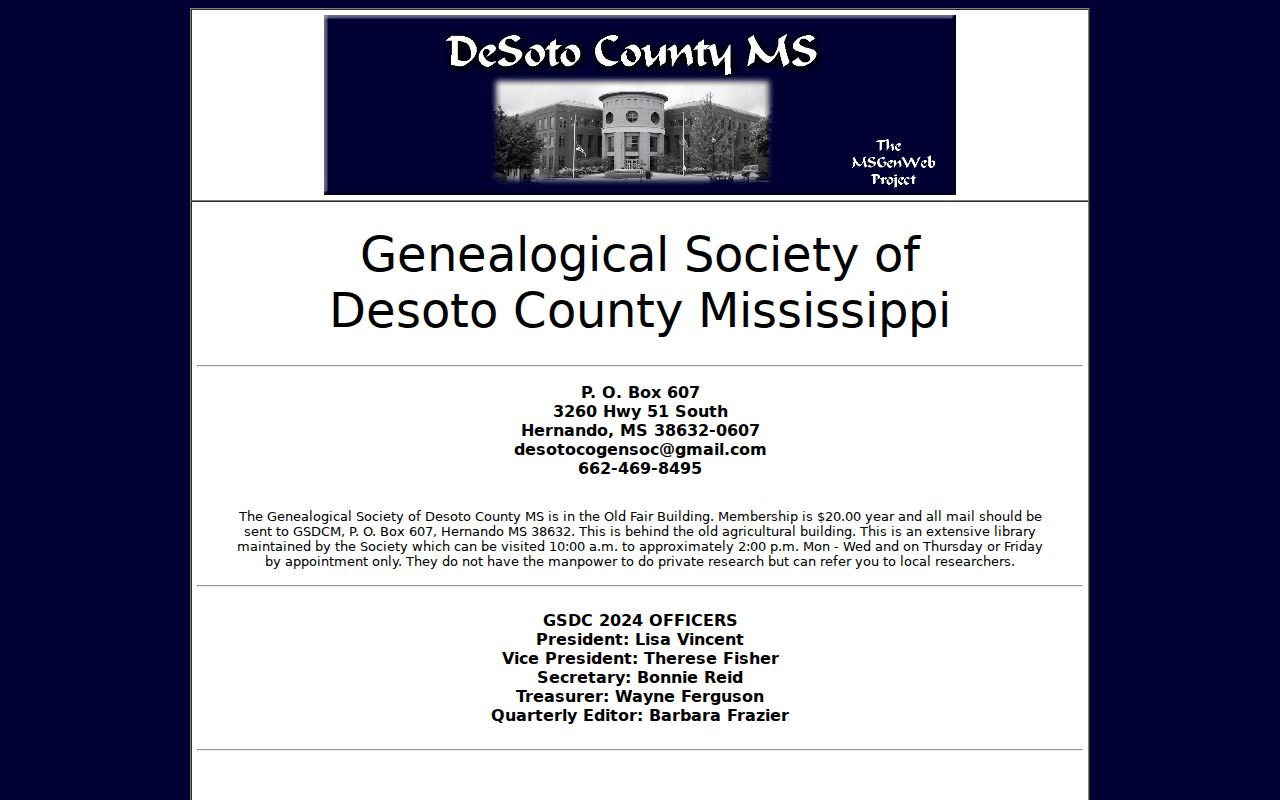
The DeSoto County Genealogical Society keeps a physical library in Hernando. It sits in the Old Fair Building. Its shelves hold family files plus cemetery, census, church, court, and local-publication material. Hours are limited weekdays. The society does not staff private research. It can refer researchers, and its DeSoto Descendants Quarterly, 1890 replacement-census index and map, cemetery surveys, and county-history name index fill the gap when a city directory is absent.
The DeSoto County Genealogical Society page documents the library and publication leads shown in this capture.
For formal archival work, Mississippi Department of Archives and History offers a DeSoto finding aid covering county records from 1799 through 1980. Selected Digital Archives material is also available. Reading-room research and reproduction options exist too. An online description may point to a box or microfilm reel you must consult in person.
Read an Olive Branch City Directory Entry Carefully
The USM Polk guide gives the closest documented Mississippi directory format. It is not an Olive Branch sample. Its layout ran to several parts. There was a buyer's guide and business classifieds. Alphabetical names came with telephone number, address, occupation, and marital status. A householder list came next. It used a numerical street and avenue guide plus a reverse telephone directory. Record the section and page with every transcription. A name list and a householder list answer different questions.
| Name as printed | Keep initials, suffixes, alternate spellings, and any marital notation exactly as shown. |
|---|---|
| Address | A year-specific listing that may describe a householder, subscriber, or other listed person, not a present occupant. |
| Telephone | Useful only when a number is known; exchanges, prefixes, and listings can change. |
| Occupation or marital status | Fields described for the Polk format; do not assume every local volume would include them. |
| Owner or renter notation | No Olive Branch sample or abbreviation key was located, so do not infer a symbol's meaning without the volume's own key. |
| Directory year, publisher, section, and page | The source citation needed to distinguish one dated observation from another. |
- Criss-cross directory
- A street-order arrangement that lets a researcher read listed householders or subscribers along a numerical address sequence.
- Householder index
- A section arranged around the residence or street guide rather than only an alphabetical name list.
- Abbreviation key
- The volume's own explanation of initials and marks. Photograph or transcribe it before decoding an entry.
Olive Branch Directory Names Before Growth
Historical searches need more than today's city name. Olive Branch once answered to Pigeon Roost Road, Cowpens, and Watson's Corner. The post-office name took hold in the mid-1840s. The city incorporated in 1873 and stayed small until late twentieth-century growth. Pair those labels with a surname and DeSoto County. Do that when modern-name searches run thin. MDAH also holds Olive Branch city maps for 1970, 1973, 1975 film, 1978, 2007, and a 2008 revision, plus a digitized 1968 boundary decree in Book 172, Page 377. Maps name no occupants. Still, they explain why an address, boundary, or place label shifts between records.
Olive Branch Directory Archive Backstops
A stalled city directory search in Olive Branch calls for dated county records instead. Test the name, address, or family link against material from the era itself. MDAH's DeSoto finding aid covers county records from 1799 through 1980. Two series matter here. Series 0355 holds selected early twentieth-century county and court material. Series 1202 holds selected DeSoto tax and land items reaching back to 1837. None of this replaces a residents directory. It can still place a person, tax parcel, or legal description in a particular period.
FamilySearch offers its own backstops. DeSoto probate minutes from 1843 through 1870 sit on five reels filmed from courthouse originals. Its Mississippi marriage collection indexes 1800 through 1911, though the index is incomplete. Treat an index as a lead only. Then inspect the image, the original, or the clerk-held record wherever available. MDAH's reading room and research-request route still matter. Many online catalog entries describe material without placing every page online.
Other sources can separate two people who share a surname. A census schedule, probate file, cemetery survey, obituary, or tax record each carry their own date. Each also carries its own detail. None can turn a missing Olive Branch city directory into a verified publication. Keep the source type, date, place label, and accession or citation with every note. That habit lets another researcher reproduce the trail.
Trace Olive Branch City Directory Households
Keep each record in its own time and purpose when tracing an Olive Branch household. A historical city directory shows a listed name at a moment in the street directory's publication cycle. It may also record a telephone relationship. A census captures the household at a federal enumeration date. Parcel and deed records speak only to property. Compare these sources side by side. Do not collapse them into one claim about who lived at an address.
- Search the alphabetical section with surname variants, initials, maiden or married names, and a likely historical place or occupation.
- Write down each address, telephone, spouse notation, directory year, section, and page before moving to another source.
- Use the householder or criss-cross section to inspect the listed sequence along the street, if that section exists in the volume.
- Compare a nearby year with the 1950 Census or an earlier FamilySearch index, checking relationships, ages, and place as well as surname.
- Close the lead with an obituary, cemetery, probate, newspaper, or deed record, then cite the custodian and date for each fact.
A name that drops out of a directory is not proof of absence. The gap could reflect a move, a death, a changed listing choice, a coverage hole, or simple indexing variation. The previous residents search follows the address and deed trail instead. The directory question stays a dated historical listing question.
Limits of Olive Branch City Directories
Directory evidence is historical evidence, nothing more. The USM guide lists no Olive Branch or DeSoto County run, and no actual Olive Branch page or abbreviation key appears there. A blank catalog result carries several possible meanings. The volume may never have been published. It may sit in another repository, carry a different place label, or simply lack cataloging under the terms used. The documented fallback path runs through B.J. Chain, the genealogical society, MDAH, USM, the Library of Congress catalog, and newspaper or census research.
Note: A historical listing can identify a dated household or subscriber, but it cannot establish a person's current address or identity by itself.